

Table of Contents
If you’re a freelancer, you already know the struggle, constant pitching, chasing clients, and competing on price. It can feel like you’re always searching for work instead of having work come to you. That’s where freelance personal branding changes everything.
This guide will show you how to build a strong online presence that attracts high-quality clients organically. By the end, you’ll understand how to position yourself as an authority so clients seek you out, without relying on endless outreach.

1. Build a Portfolio Website That Converts
Your portfolio website isn’t just a digital resume, it’s your 24/7 sales machine. Many freelancers make the mistake of showcasing work without guiding visitors toward action. A high-converting portfolio should clearly communicate your value and make it easy for potential clients to hire you.
Start by focusing on clarity over creativity. Your homepage should instantly answer three questions: who you help, what you do, and why you’re different. Include strong calls-to-action like “Book a Call” or “Get a Quote.”
According to the ebook, your website is the foundation of your online presence, where you control your narrative and showcase your expertise effectively .
Also, optimize your site for SEO by targeting keywords like freelance services, hire [your skill], and best [your niche] freelancer. This ensures your website doesn’t just look good, it gets found.
2. Write a Homepage That Communicates Your USP Instantly
Your homepage has less than 5 seconds to capture attention. If your message is vague, visitors leave.
This is where your Unique Selling Proposition (USP) comes in. Instead of saying “I’m a freelance designer,” say something like:
“I help SaaS startups increase conversions through data-driven UI design.”
Your USP should be:
- Clear
- Benefit-driven
- Specific to your niche
The ebook emphasizes that a strong USP is the core of your personal brand, helping you stand out in a crowded market and attract ideal clients .
When your message resonates instantly, you don’t need to convince clients, they already see you as the right choice.
3. Use LinkedIn Strategically for Client Acquisition
LinkedIn is one of the most powerful platforms for B2B freelance marketing, yet most freelancers underutilize it.
Instead of treating LinkedIn like a resume, use it as a lead generation tool. Optimize your headline with keywords like freelance copywriter for SaaS or SEO consultant for eCommerce brands.
Post content that demonstrates expertise, case studies, insights, and lessons learned from real projects. Engage with your target audience by commenting on their posts and joining industry conversations.
The ebook highlights LinkedIn as a critical platform for building visibility and networking with potential clients .
Consistency here builds familiarity, and familiarity builds trust.
4. Choose the Right Social Platforms for Your Niche
Not every platform is worth your time. The key is to focus where your ideal clients are most active.
For example:
- Designers thrive on Instagram and Behance
- Writers and consultants perform well on LinkedIn and Twitter
- Video creators benefit from YouTube and TikTok
Spreading yourself too thin reduces effectiveness. Instead, dominate one or two platforms.
The ebook reinforces this approach, focus on platforms aligned with your niche and audience behavior to maximize results .
When you show up consistently in the right places, you become recognizable, and that’s when inbound leads start happening.
5. Create Content That Solves Real Client Problems
Content marketing is the engine behind inbound freelance clients. But not all content works.
The most effective content addresses real problems your clients face. Think:
- “How to improve website conversion rates”
- “Why your ads aren’t generating leads”
When your content provides solutions, you position yourself as an expert—not just a service provider.
The ebook explains that valuable content builds trust and demonstrates your expertise, making clients more likely to choose you .
Focus on practical, actionable insights. That’s what converts readers into clients.
6. Use SEO to Get Inbound Leads
SEO is one of the most underrated strategies for freelancers. Instead of chasing clients, you can rank on Google and let clients find you.
Start by targeting keywords your ideal clients search for, such as:
- best freelance web designer
- SEO services for small businesses
- hire freelance copywriter
Create blog posts, landing pages, and case studies optimized around these keywords.
As highlighted in the ebook, implementing basic SEO practices, like keyword optimization and fast-loading pages, can significantly increase your visibility .
SEO takes time, but once it works, it becomes a consistent source of high-quality leads.
7. Show Social Proof (Testimonials & Reviews)
Clients trust other clients more than they trust you. That’s why social proof is essential.
Display testimonials prominently on your website and social profiles. Don’t just collect generic praise—ask for specific results:
- “Increased conversions by 35%”
- “Helped us generate 50+ leads in a month”
The ebook emphasizes that testimonials and reviews build credibility and influence hiring decisions .
If possible, include case studies that show before-and-after results. This transforms your brand from “skilled freelancer” to “proven expert.”
8. Start a Blog or YouTube Channel
Long-form content like blogs and YouTube videos helps you build authority faster than short posts.
A blog allows you to target SEO keywords and rank on Google. YouTube helps you build trust through face-to-face connection.
For example:
- Blog: “Best email marketing strategies for startups”
- YouTube: “How I helped a client double their sales”
The ebook highlights content marketing as a powerful way to establish expertise and attract clients organically .
The more value you provide, the more you become the go-to expert in your niche.
9. Stay Consistent With Content and Branding
Consistency is where most freelancers fail. Posting once a week for a month won’t build a brand.
You need a long-term strategy, whether it’s:
- Posting 3 times a week on LinkedIn
- Publishing 2 blog posts per month
- Uploading weekly YouTube videos
The ebook stresses that maintaining a consistent content schedule is crucial for building a strong online presence .
Consistency builds recognition, and recognition builds trust. Over time, this compounds into authority.
10. Continuously Optimize Your Freelance Personal Brand
Your personal brand isn’t static, it evolves.
Regularly update your:
- Portfolio with recent work
- Website content
- Social profiles
- SEO strategy
The ebook highlights that your digital presence should be continuously refined based on trends, feedback, and performance metrics .
Track what’s working and double down on it. Eliminate what’s not. This iterative approach ensures your brand keeps growing.
Ready to Build a Freelance Brand That Attracts Clients?
Stop chasing random advice and start building a brand that gets noticed, trusted, and paid with a clear system that works.
Final Verdict
Building a freelance personal brand that attracts clients isn’t about quick wins, it’s about creating a system that works for you long-term.
When you combine a strong USP, strategic content marketing, SEO, and consistent visibility, you shift from chasing clients to attracting them. That’s the real power of inbound marketing for freelancers.
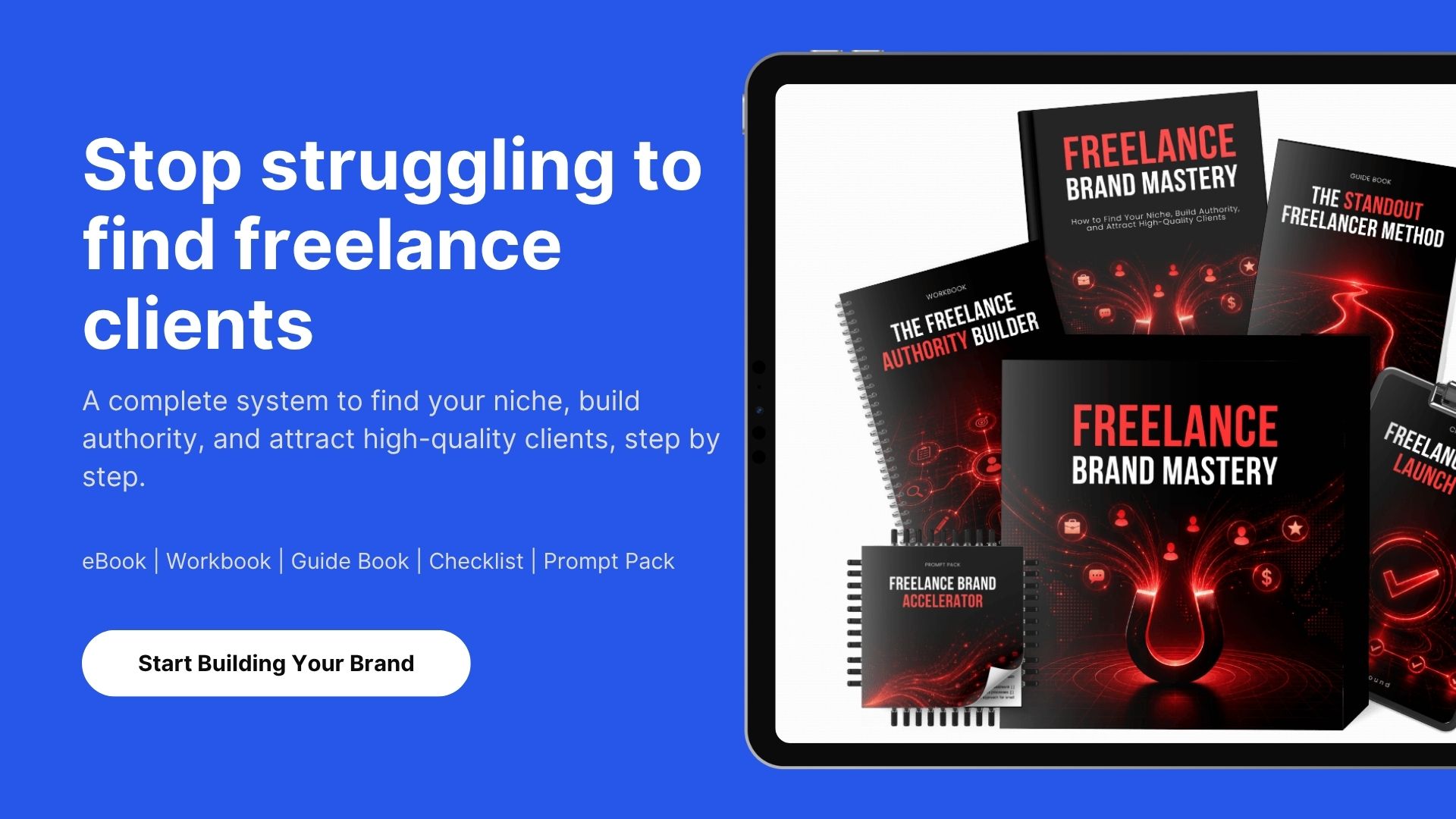
If you want a step-by-step system to implement everything covered here, from finding your niche to building authority and attracting high-quality clients, the Freelance Brand Mastery ebook is a valuable resource. It dives deeper into strategies, frameworks, and actionable steps to accelerate your growth.
Frequently Asked Question
How long does it take to build a freelance personal brand?
It typically takes 3–6 months of consistent effort to see initial results. Strong authority and inbound leads usually build over 6–12 months.
Do I need a website to attract freelance clients?
Yes. A portfolio website acts as your central hub, builds credibility, and improves your chances of converting visitors into clients.
Which platform is best for freelance marketing?
It depends on your niche. LinkedIn is best for B2B services, while platforms like Instagram or YouTube work well for visual or creative fields.
Is SEO worth it for freelancers?
Absolutely. SEO helps you rank on Google and generate inbound leads consistently, reducing the need for constant outreach.
What type of content attracts clients the most?
Content that solves specific client problems—such as case studies, how-to guides, and actionable insights—performs best.