

Table of Contents
In today’s competitive freelance market, talent alone isn’t enough. Many freelancers struggle to stand out, attract high-paying clients, or build consistent income, not because they lack skills, but because of avoidable freelance personal branding mistakes.
This guide breaks down the most critical errors freelancers make and how to fix them. By the end, you’ll know exactly how to position yourself, build authority, and create a personal brand that attracts clients instead of chasing them.

1. Not Choosing a Clear Niche
One of the biggest mistakes freelancers make is trying to serve everyone. It may feel safer to stay general, but in reality, it weakens your positioning and makes it harder to attract quality clients.
When you don’t define a niche, your messaging becomes vague. Clients don’t immediately understand what you specialize in, and that confusion leads them to choose someone else who communicates their value clearly.
The ebook highlights that finding a niche is about identifying the intersection of your skills, passions, and market demand, which allows you to stand out and command higher rates .
Specialization is no longer optional, it’s essential. Clients are searching for experts, not generalists.
To fix this, start by narrowing your focus. Instead of being a “freelance writer,” position yourself as a “B2B SaaS copywriter” or “email marketing specialist for eCommerce brands.” This clarity makes your brand more memorable and easier to trust.
2. Having a Weak or Unclear Unique Selling Proposition (USP)
Your Unique Selling Proposition (USP) is the backbone of your personal brand. Without it, you blend into a sea of freelancers offering similar services.
A weak USP sounds generic, something like “I deliver high-quality work.” But every freelancer says that. It doesn’t differentiate you.
According to the ebook, a strong USP clearly communicates your value, differentiates you from competitors, and helps attract ideal clients .
In practical terms, your USP should answer:
- Who do you help?
- What result do you deliver?
- How are you different?
For example:
“I help eCommerce brands increase conversions through data-driven email marketing.”
That’s specific, outcome-focused, and client-centered.
If your USP isn’t instantly clear, you’re losing opportunities before conversations even begin.
3. Ignoring Your Online Presence
Your online presence is your brand. If you’re not actively managing it, you’re invisible to potential clients.
Many freelancers rely solely on platforms like Fiverr or Upwork, but that limits control over your brand and pricing. A strong personal brand requires a professional online presence, including a portfolio website, optimized social profiles, and consistent visibility.
The ebook emphasizes that your website acts as the foundation of your digital presence, showcasing your expertise and attracting opportunities .
Without a strong online presence, you miss out on inbound leads, credibility, and long-term growth.
To fix this, build a simple but professional website. Optimize your LinkedIn profile with relevant keywords like freelance SEO specialist or web designer for startups.
Your goal is to create a digital footprint that works for you, even when you’re not actively looking for clients.
4. Not Having a Content Strategy
Content is one of the most powerful tools for building authority, yet many freelancers either ignore it or approach it inconsistently.
Posting randomly without a plan rarely delivers results. A strong content marketing strategy for freelancers focuses on solving client problems, showcasing expertise, and building trust over time.
The ebook highlights content marketing as a key driver of authority and inbound opportunities, helping freelancers demonstrate their expertise effectively .
Instead of posting generic updates, create content that answers real client questions:
- “How to improve website conversion rates”
- “Best SEO strategies for small businesses”
- “Common branding mistakes startups make”
Consistency is key. Whether it’s blogging, LinkedIn posts, or YouTube videos, your content should reinforce your expertise and position you as a go-to authority.
Without a content strategy, you’re missing one of the most scalable ways to attract clients organically.
5. Treating Networking as Optional
Many freelancers underestimate the power of networking, assuming that skills and portfolios alone will bring clients. But in reality, networking is one of the most effective ways to land high-paying freelance clients.
The ebook emphasizes that networking is crucial for long-term success, with a significant portion of freelancers finding their best opportunities through relationships .
Ignoring networking limits your growth. You miss out on referrals, collaborations, and opportunities that don’t exist on job boards.
Effective networking isn’t about collecting contacts, it’s about building relationships. Engage on LinkedIn, participate in online communities, and stay in touch with your network.
When done right, your network becomes a consistent source of opportunities, reducing your reliance on cold outreach.
6. Failing to Adapt to Market Changes
The freelance landscape evolves constantly. New tools, trends, and client expectations emerge every year.
Freelancers who fail to adapt risk becoming irrelevant. Skills that were in demand a few years ago may no longer be competitive today.
The ebook highlights the importance of continuous learning and adaptation, emphasizing the need to stay updated with industry trends and evolving client needs .
Adaptability is a competitive advantage. Clients value freelancers who stay ahead of trends and bring innovative solutions.
To stay relevant:
- Invest in learning new tools and skills
- Follow industry trends
- Update your services based on market demand
Your personal brand should evolve alongside your expertise. That’s how you maintain long-term success.
Ready to Build a Freelance Brand That Attracts Clients?
Stop chasing random advice and start building a brand that gets noticed, trusted, and paid with a clear system that works.
Final Verdict
Avoiding these freelance personal branding mistakes can completely transform your freelance career. When you choose a clear niche, craft a strong USP, build an online presence, create valuable content, network strategically, and adapt to change, you position yourself for sustainable growth.
Personal branding isn’t about self-promotion, it’s about creating a system that consistently attracts the right clients.
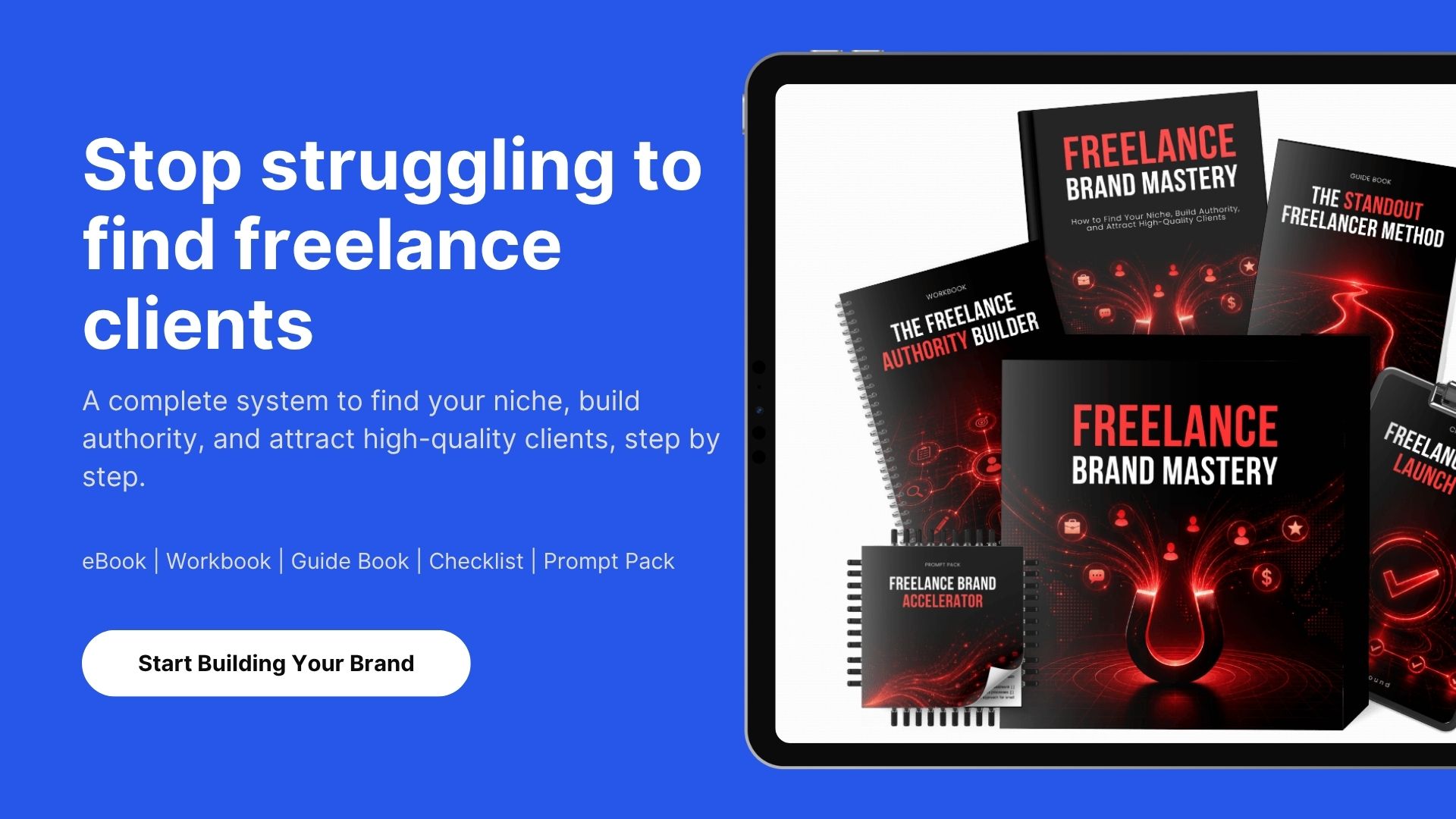
If you want a complete roadmap to avoid these mistakes and build a powerful freelance brand step-by-step, the Freelance Brand Mastery ebook provides a structured system, proven strategies, and practical insights to help you grow faster and smarter.
FAQs about Freelance Personal Branding Mistakes
Why is personal branding important for freelancers?
Personal branding helps freelancers stand out in a competitive market, attract high-paying clients, and reduce reliance on job platforms or cold outreach.
What is the biggest mistake freelancers make in branding?
Not choosing a niche. Without specialization, it’s difficult to differentiate yourself and attract the right clients.
How can freelancers improve their online presence?
By building a portfolio website, optimizing social profiles, and consistently sharing valuable content that demonstrates expertise.
Is content marketing necessary for freelancers?
Yes. Content marketing builds authority, improves SEO, and attracts inbound leads, making it one of the most effective long-term strategies.
How do freelancers stay competitive in a changing market?
By continuously learning new skills, adapting to trends, and refining their services based on client needs and industry demand.